

You are here
GOTW: +2 and lost!

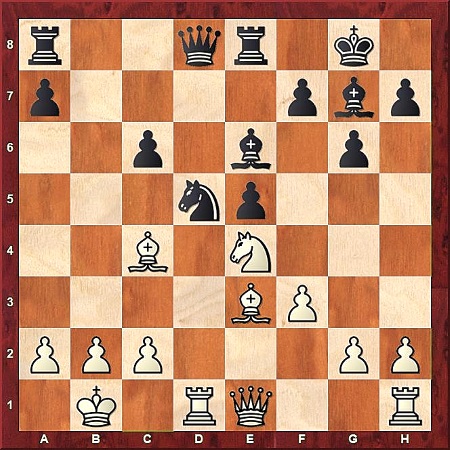
Magnus Carlsen is the World Champion and rated 2830, and that seems to mean he can give piece odds to a mere 2630 GM and still win.
The Dragon is so bad that even when you're a piece up you are still almost lost!
Those were the kinds of semi-jokes making the rounds Sunday after Carlsen blundered a piece in a known position in the Dragon against Gawain Jones at the TATA Steel tournament in Wijk aan Zee, and yet still managed to win.
When reviewing this game before round 5 at the Ottawa Winter Open, GM Bator Sambuev said he had (mis)played the same opening as in Carlsen-Jones, and rather than get a bad position with no play against an FM, he sacrificed his queen... and won! I found that game and annotated it, along with another Carlsen game in the same variation when he survived against 2700+ Peter Leko.
The three games are preceeded by an Opening Survey on this 10.Qe1 line against the Dragon.
In all three games, one player was at least +2... and did not win, and in two of them they lost.
..
() - ()
Round: Result:
Round: Result:
[Event "Opening Intro"]
[Site "?"]
[Date "2018.01.21"]
[Round "?"]
[White "9.000 10.Qe1"]
[Black "Dragon"]
[Result "*"]
[ECO "B76"]
[Annotator "John Upper"]
[PlyCount "32"]

{OPENING SURVEY} 1. e4 c5 2. Nf3 d6 3. d4 cxd4 4. Nxd4 Nf6 5. Nc3 g6 6. Be3 Bg7 7. f3 O-O 8. Qd2
Nc6 {White's main moves are Bc4 and 000. The former was Fischer's
favourite, putting the B on an active square, preventing ...d5, and aiming for
h4-h5 "sac-sac-mate"; but the latter move has become the modern mainline as
Black's defences -- ...h5! -- to the Yugoslav attack have been more thoroughly
worked out.} 9. O-O-O {Allows ...d5, which was long thought to give Black
equality, but that's not so clear, and White has scored well by allowing ...d5
and then playing against Black's ragged center pawns.} (9. Bc4 Bd7 10. O-O-O
Rc8 11. Bb3 Ne5 12. h4 h5 $1 $13) 9... d5 10. Qe1 $5 {First played in the late
1980s, this has become White's top choice. The Q retreat creates an X-ray from
the Rd1 to the Qd8.} ({The older line goes:} 10. exd5 Nxd5 11. Nxc6 bxc6 12.
Bd4 (12. Nxd5 cxd5 13. Qxd5 {the Dragon would be losing if not for the
following sequence:} Qc7 $1 14. Qxa8 $6 (14. Qc5 Qb7 $13) 14... Bf5 {
Threatening mate and attacking the Q.} 15. Qxf8+ Kxf8 16. Rd2 {computers say 0.
00, but in practice Black scores around Elo +80. Possibly a good choice for
older club players who want to take their eager young Dragon-loving opponents
into a complex near-endgame.}) 12... e5 13. Bc5 Be6 14. Ne4 (14. Bxf8 $5 Qxf8
15. Nxd5 cxd5 {Black's center and B pair and lack of open files for the White
Rs are reckoned to give Black the better game.}) 14... Re8 15. h4 $14) 10... e5
(10... e6 {is also possible, but White has to know what to do on the more
forcing ...e5.}) (10... dxe4 $4 11. Nxc6 $18) 11. Nxc6 bxc6 12. exd5 Nxd5 $1 (
12... cxd5 $2 13. Bg5 $16 Be6 (13... d4 $2 14. Qxe5 Ng4 15. Qxg7+ Kxg7 16. Bxd8
dxc3 (16... Nf2 17. Rxd4 $18) 17. fxg4 cxb2+ 18. Kxb2 $18 {1-0 (40) Zhou,Q
(2239)-Qiao,C (1741) Ottawa, 2016.}) 14. Kb1 $2 (14. Qxe5 $2 {opens the long
diagonal and hands Black an attack; e.g.} h6 $1 15. Bh4 (15. Bxf6 Bxf6 16. Qe1
Rb8 $19) 15... g5 16. Be1 Ne4 $5 (16... Nh5 $1) 17. Qxe4 {Only move.} $13) (14. Bc4 $1
$16 {is Lugovoi-Sambuev, 1998, and Leko-Carlsen, 2008. See: Leko-Carlsen, and
Lugovoi-Sambuev}) 14... Rb8 $17 {Black has the center, two Bs pointing at the
White K, and two half-open files.} 15. g4 $2 {Too slow. Stockfish says: -3.5.} (15. Bc4 {transfers a
piece to defend the K.}) 15... Qb6 ({or} 15... Qc7 $19) 16. b3 Rfc8 $4 (16...
Qc5 $19) 17. Bxf6 {Only move.} Bxf6 (17... Rxc3 $5 18. Bxg7 Re3 $13 19. Bxe5 $5 Rxe1 20.
Rxe1 $13) 18. Nxd5 {Only move.} $13 Bxd5 19. Rxd5 Rxc2 $4 (19... e4 $1) (19... Rc7 $4 20.
Rb5 $18) 20. Kxc2 Rc8+ (20... Qc6+ 21. Bc4 {is what Black overlooked.}) 21. Bc4
e4 22. Qxe4 Qb4 23. Kd1 Qc3 24. Ke2 Kf8 25. Rd7 {1-0 Zhou,Q (2104)-Kalra,A
(2145) Ottawa, 2013.}) 13. Bc4 (13. Bc5 $2 Bh6+ $1 14. Kb1 Nxc3+ 15. bxc3 Qa5
$17 {leads to a position Jones evaluates as clear advantage for Black.}) 13...
Be6 14. Kb1 (14. Ne4 Qc7 15. Ng5 $2 (15. Bc5 Rfd8 $13 {Jones's 2017 reperoire
book on the Dragon for Quality Chess has a lot more analysis here, one main
line continuing:} 16. h4 Nf4 $1 17. Bxe6 Rxd1+ $1 18. Qxd1 Nxe6 19. Be3 f5 $1
20. Ng5 Nxg5 21. hxg5 f4 22. Bd2 e4 $1 23. fxe4 Qe5 24. Bc3 Qxg5 25. Qd7 $1
Bxc3 26. Qxh7+ Kf8 27. Qb7 $1 Bxb2+ 28. Kxb2 $11) 15... Nxe3 $1 16. Nxe6 Qb6 {Only move.}
$19 17. Nxf8 Nxc4 18. Qc3 Qa6 $1 19. Qb3 ({Saving the N costs the K:} 19. Nd7
Qxa2 20. b3 Bh6+ $19) 19... Rxf8 $19 20. Kb1 e4 21. c3 e3 22. Ka1 Nd2 23. Qc2
Re8 24. Rhe1 Re5 25. a3 Qc4 {0-1 (25) Timman,J (2629)-Fedorov,A (2575) Wijk
aan Zee, 2001.}) (14. Bc5 $6 Qg5+ $1 15. Kb1 Rfd8 $15 {brings the R to d8 in
one move.}) 14... Re8 (14... Rb8 15. Ne4 f5 16. Ng5 Bc8 17. h4 h6 18. Ne4 {
½- ½ (52) Edouard,R (2659)-Jones,G (2661) London 2014}) 15. Ne4 (15. h4 Qc7
16. Nxd5 cxd5 17. Bxd5 Bxd5 18. Rxd5 e4 19. fxe4 Rxe4 20. Qd2 Bxb2 21. Kxb2
Qb7+ 22. Ka1 Rxe3 23. h5 Qe7 24. h6 Re8 $11 {Navara,D (2735)-Edouard,R (2641)
Drancy, 2016 (½-½, 54).}) 15... f5{Novelty.} (15... Qc7 16. Bc5 h6 17. g4 Nf4 18.
Bd6 Qb6 19. Bxe6 Rxe6 20. Bc5 Qb5 21. b3 Ree8 22. h4 Qe2 23. Qxe2 Nxe2 24. g5
$16 h5 25. Rd6 a5 26. Rxc6 a4 27. Re1 Nf4 28. b4 $1 $18 {1-0 (36) Leko,P (2709)
-Trent,L (2463) Douglas 2016}) 16. Ng5 Bc8 {see Carlsen,M (2834)-Jones,G (2640)
TATA, 2018.} *

[Event "TATA"]
[Site "?"]
[Date "2018.01.21"]
[Round "8"]
[White "Carlsen, Magnus"]
[Black "Jones, Gawain"]
[Result "1-0"]
[ECO "B76"]
[WhiteElo "2834"]
[BlackElo "2640"]
[Annotator "John Upper"]
[PlyCount "83"]

{Is it really possible that the World Champion can give a 2640 GM piece odds and still win...?} 1. e4 c5 2. Nf3 d6 3. d4 cxd4 4. Nxd4 Nf6 5. Nc3 g6 6. Be3 Bg7
7. f3 Nc6 8. Qd2 O-O 9. O-O-O d5 10. Qe1 $5 e5 11. Nxc6 bxc6 12. exd5 Nxd5 $1 (
12... cxd5 $2 13. Bg5 Be6 14. Bc4 $1 $16 {See: Leko-Carlsen, and
Lugovoi-Sambuev}) 13. Bc4 Be6 14. Kb1 {[#]After the game, Carlsen said he was
surprised that Jones chose to play the Dragon! That seemed preposterous to
everyone, since Jones authored a two-volume repertoire on the Dragonfor Quality Chess, and because he plays it
regularly (see notes).} Re8 (14... Rb8 15. Ne4 f5 16. Ng5 (16. Nc5 Bf7 {
and the Bf7 attacks and defends.}) 16... Bc8 17. h4 h6 18. Ne4 fxe4 $5 (18...
Be6 19. Nc5 Bf7 20. Na6 Rb7 21. Bb3 Qf6 22. Nc5 Re7 23. c3 $13 {½-½ (52)
Edouard,R (2659)-Jones,G (2661) London, 2014.}) 19. fxe4 {White gets the piece
back due to the pin, but here} Rf4 $1 {is a good try for Black.} 20. Bxf4 exf4
21. c3 (21. exd5 $4 Rxb2+ 22. Kc1 Qb6 $19) 21... Qb6 22. Qd2 Qc5 23. Bb3 Kh7
24. exd5 Bf5+ 25. Kc1 (25. Ka1 $4 Rxb3 $19) 25... Rxb3 26. axb3 Qa5 27. Qe2 {Only move.}
Bxc3 $1 28. Qe7+ {Only move.} Bg7 29. Qa3 Qb6 $11 {½-½ (61) Lampert,J (2442)-Jones,G
(2643) Wunsiedel, 2015.}) 15. Ne4 (15. h4 Qc7 16. Nxd5 cxd5 17. Bxd5 Bxd5 18.
Rxd5 e4 19. fxe4 Rxe4 20. Qd2 Bxb2 $1 21. Kxb2 Qb7+ 22. Ka1 Rxe3 $13 {(½-½,
54) Navara,D (2735)-Edouard,R (2641) Drancy, 2016.}) 15... f5 {Novelty.} 16. Ng5 Bc8
{[#]} 17. g4 $4 {.. It is a sign of how much respect GMs have for Carlsen that
during the live commentary, both GM Ivan Sokolov and GM Eric Hansen were not
sure this was a blunder: Sokolov said there is no way Carlsen could have
overlooked ...f4, and Hansen speculating that giving the piece for positional
domination by his minors might be some sort of AlphaZero-level preparation by
Carlsen. .. Watching the live video, Carlsen's sister -- not fooled by her
little brother's Great Chess Reputation -- tweeted that it was obvious to her
that he must have blundered since his body language was "painful" to watch. ..
How does the World Champion make a blunder like this? After the game, Sambuev
told me he thought the problem is that Carlsen's positional evauation is SO
strong and so reliable that it prevented him from seeing the positionally
awful move ...f4, it just wasn't on his radar. That idea was also expressed by
GM Jonathan Rowson, who tweeted:  17...f4 would be positionally catastrophic
for Black if it didn't win a piece.  One difference between humans and
computers is that our strategic filters often trump our tactical filters at
the worst possible moments.  ..} (17. h4 h6 18. Ne4 {as in Jones's games
against Edouard and Lampert (above).}) 17... f4 18. h4 fxe3 19. Qxe3 h6 $1 {
Black wants to play ...Be6 and wants to meet any pawn push on the kingside
with an adjacent push of his own, keeping the g and h-files closed. White has
only a pawn for the B. Stockfish says: -2.2 Komodo says: -1.6} 20. Qc5 $1 {
Attacks c6 and so pulls Black's LSB onto an inferior diagonal which also
blocks the b-file. Carlsen played this, and most of his next moves much more
quickly than Jones.} Bb7 (20... hxg5 $2 21. Qxc6 Be6 22. Bxd5 Bxd5 23. Rxd5 Qb6
$17 {and White can keep Qs on with Qc4 or try to hold with three pawns for the
B by exchanging and taking on g5. Black is clearly better in either case as
the f-pawn is a long term weakness.}) 21. Ne4 Re6 $5 {Prevents Qd6! -- a move
which is unnatural (trading Qs when down material) but tactically strong.} (
21... Bf8 $142 {also prevents Qd6, and gets the B out from behind the e5 pawn.}
22. Qe3 Kg7 {was Sokolov's suggestion.} (22... Kh8 {is Stockfish8.})) 22. h5
Qb6 $2 {The right idea -- trading Qs -- but tactically flawed.} (22... g5 $142
{as Eric Hansen said several moves earlier, and as everyone said after, Black
responds to any kingside push by closing the kingside, and only then worrying
about developing and trading pieces.}) 23. g5 $1 {White doesn't have to move
his Q since a trade on c5 gives him winning tactics (see next note). If this
was a normal position -- add a White Bc1 and a Black f4-pawn -- White would be
clearly winning. Down a piece for a pawn, White is not winning, but has very
strong play against the Black K. Stockfish says: -.7 Komodo says: -.5} hxg5 (
23... Qxc5 $4 {loses:} 24. Nxc5 Re7 (24... Bc8 25. Rxd5 $1 $18) 25. Nxb7 Rxb7
26. Rxd5 cxd5 27. Bxd5+ $18 {White wins one of the Rs with an overwhelming
material advantage.}) (23... Bf8 24. Qg1 $1 Qxg1 25. Rdxg1) 24. Qa3 $1 $13 {
Black is up a whole piece, but Stockfish8 rates the position 0.00.} Rb8 25. b3
Qd8 (25... g4 $5 {gives the pawn back on the g-file to keep it closed.}) 26.
Qxa7 $1 {Around here, Sokolov and Hansen were predicting a Carlsen win.} gxh5
$2 (26... Bh6 27. hxg6 Rxg6 28. Rd2 {and White is ready to double on the h or
d-files with advantage.}) 27. Rxh5 Rg6 28. Rxg5 $1 Rxg5 29. Nxg5 Qc8 (29...
Qxg5 $2 {loses the R and B to} 30. Qxb8+ $18) 30. Rg1 $1 Ra8 31. Qb6 $1 Ra6 {
[#]} 32. Qc5 {The first time since move 20 that the computer suggests a better
move for White:} (32. Qe3 $5 $18 {either way, White is winning. Materially,
Black is up a B for two pawns, but his K is very exposed and his Bb7 and Ra6
are both very poorly placed.}) (32. Bxa6 $4 {unpins the N, so} Nxb6 $19 {
when Black would once again have good chances against the World Champion ;)})
32... Qd7 33. Ne4 Kh8 34. Qf2 {Threatens Q-h-file check, then Nf6+.} Qe7 35.
Bxa6 Bxa6 36. Qh2+ Kg8 37. Qh6 Qa7 38. Qe6+ Kf8 (38... Qf7 39. Qxc6 Bb7 40. Qd6
$18) 39. Rg5 (39. Qd6+ $1 {is more ruthless, but White has found a simpler win.
}) 39... Ne3 40. Qd6+ Kf7 41. Nc5 Bc8 42. Rxg7+ (42. Rxg7+ Kxg7 43. Qxe5+ Kf7
44. Qxe3 $18 {with the better minor piece, safer K, and (for those
irredeemable materialists), three extra pawns. .. Jones was a good sport after
his loss, and discussed it with Eric in the official feed.}) 1-0

[Event "Miskolc m"]
[Site "Miskolc"]
[Date "2008.05.31"]
[Round "5"]
[White "Leko, Peter"]
[Black "Carlsen, Magnus"]
[Result "1/2-1/2"]
[ECO "B76"]
[WhiteElo "2741"]
[BlackElo "2765"]
[Annotator "John Upper"]
[PlyCount "129"]
[EventDate "2008.05.28"]
[EventType "match (rapid)"]
[EventRounds "8"]
[EventCountry "HUN"]


{Carlsen played the Dragon regularly in his early teens. This is
a rapid game where Peter Leko gives Magnus a lesson in the kind of play
against weak pawns which Carlsen would later deal out as World Champion.} 1. e4
c5 2. Nf3 d6 3. d4 cxd4 4. Nxd4 Nf6 5. Nc3 g6 6. Be3 Bg7 7. f3 Nc6 8. Qd2 O-O
9. O-O-O d5 10. Qe1 e5 11. Nxc6 bxc6 12. exd5 cxd5 $2 (12... Nxd5 {see
Carlsen-Jones, 2018.}) 13. Bg5 Be6 14. Bc4 $1 Qc7 {[#] White has a choice:
take on f6 and keep a small advantage against Black's weak pawns, or take on
d5 to win a pawn while opening lines at the Kc1.} 15. Bxf6 {Leko takes the
safe route.} (15. Bxd5 {Ganguly plays the more dynamic move.} Nxd5 16. Nxd5
Bxd5 17. Rxd5 {White is up a pawn, but Black has two half-open files and a B
pointed at White's K.} Rab8 18. b3 Rfc8 19. c4 Qb7 {threatening ...Qxd5 and ...
Rxc5.} 20. Qe4 Qb4 {Threatening ...Qc3.} 21. Kd1 f5 22. Qe1 $2 (22. Qc2 $16)
22... Qa3 $2 {Black misses his chance.} (22... Rxc4 $1 $14 23. bxc4 $2 Qa4+ $1
{and ...Qxc4.}) 23. Rd7 h6 $2 {[#]} 24. Qd2 $3 $18 {Suddenly White has a
crushing attack.} Rb6 $2 ({If Black takes the B then White can push his h-pawn
to overload the defence:} 24... hxg5 25. Qd5+ Kh7 26. h4 g4 27. h5 g5 (27...
Kh6 28. Qf7 $18) 28. h6 $18) 25. Rxg7+ $1 {1-0 (25) Ganguly,S (2654)-Wang,R
(2341) Edmonton, 2016.}) 15... dxc4 16. Bxg7 Kxg7 17. Nd5 Bxd5 18. Rxd5 Rfe8
19. Qc3 $14 {[#] Compared to Ganguly-Wang: material is equal, and Black has
less pressure on the queenside, but White has a better structure; and with
open lines and major pieces, that better structure is likely to turn into an
extra pawn.} Kg8 20. Qa5 Qe7 21. Re1 Qh4 22. Rdxe5 Rxe5 23. Qxe5 $16 {White is
up one safe pawn.} Rd8 24. h3 c3 $5 25. Qxc3 Qg5+ 26. f4 $1 Qxg2 27. b3 Qf2 28.
Re4 Qg2 29. Rc4 $1 $18 {[#] White is up a protected passed pawn, his K is safe
and his pieces are coordinated. Stockfish says: +2.2 Komodo says: +1.3} Qd5 30.
Kb2 Qf5 31. a4 h5 32. Qe3 a6 33. Rc5 Qf6+ 34. Qe5 {[%mdl 4096]} Kg7 $5 {
Rather than leave White's Q to dominate the board, Carlsen allows the trade so
that he might get some counterplay with his K.} 35. Qxf6+ Kxf6 $18 {[#]} 36.
Rc4 $2 {Peter Leko: Safety first.} (36. a5 $1 $18 {is simplest, White's R is
already perfectly placed and the time it would take for ...Rd4xf4 (and the
position it would leave Black's R) would give White an easy win.}) (36. Rc6+ $1
{Gives Black dangerous-looking counterplay, but White is fast enough to win.
Gives Black counterplay, but it is too slow.} Kf5 37. Rxa6 Kxf4 38. Rf6+ Kg3
39. Rxf7 Kxh3 (39... g5 40. Rg7 g4 41. hxg4 h4 (41... hxg4 42. b4 $18) 42. Rh7
$18 {is a much better version of the kind of ending we see in the game.}) 40.
Rg7 Rd6 (40... h4 41. Rxg6 $19 {White's pawns will be way up the board before
the Black K gets off the edge.}) 41. b4 $18) 36... Kf5 37. b4 f6 38. Kc3 g5 39.
fxg5 fxg5 40. Rc7 $1 (40. b5 $2 axb5 41. axb5 g4 42. Rb4 g3 $11 {and the race
is tied.}) (40. Rc6 $2 g4 {Only move.} 41. hxg4+ (41. Rc5+ Kf4 42. Rxh5 g3 $11) 41...
hxg4 42. Rxa6 g3 43. Ra7 Kf6 $1 {prevents the R from coming back.} (43... Rg8
44. Rf7+ Ke4 45. Rf1 g2 46. Rg1 $16 {only White has winning chances.}) 44. Ra6+
{Only move.} Kf5 45. Ra5+ {Only move.} Kf6 46. Ra6+ {Only move.} $11) 40... Rg8 (40... g4 41. hxg4+ hxg4 42.
Rg7 $1 Kf4 43. b5 $18) 41. Rh7 $1 h4 42. b5 $1 (42. Rf7+ $1 Ke4 (42... Ke6 43.
Ra7 $18) 43. b5 g4 44. hxg4 h3 45. Rh7 $18) 42... axb5 43. axb5 Kf4 {[#]} 44.
Rd7 {Only move.} (44. b6 $2 Kg3 45. b7 Kxh3 46. Rg7 Rb8 $11) 44... g4 45. hxg4 h3 (45...
Rh8 46. Rd1 $18 {is similar to the ending in the note to move 51.}) 46. Rh7 $2
(46. Kb4 {Only move.} $18) 46... Kxg4 $2 (46... Kg3 {Only move.} $11 {this would enable ...Rxg4
with check, then ...Rh4, drawing. The extra tempo on ...Kxg4-g3 leaves Black
one move short and could have cost him the full point.}) 47. Kb4 $18 (47. Rh6
$1 $18) 47... Kg3 48. c4 Rg6 $1 {Poses the hardest problem for White.} (48...
h2 $2 49. Rxh2 $18 (49. b6 $18) (49. c5 $4 Rg4+ 50. Ka5 Rh4 $19)) 49. Ka5 ({On
} 49. c5 $1 $18 {Leko must have been worried about Black bridging with the R:}
Rg4+ 50. Ka5 Rh4 {But White's R can get back to defend h1 just in time:} 51.
Rd7 $1 (51. Rxh4 Kxh4 $11 {leads to a drawn QP v Q ending.}) 51... h2 52. Rd1
h1=Q (52... Rf4 53. b6 Kg2 54. b7 Rf1 55. Rxf1 Kxf1 56. b8=Q h1=Q 57. Qb1+ $18)
53. Rxh1 Rxh1 54. b6 {Only move.} $18 (54. c6 $2 Rc1 {Only move.} $11 55. Kb6 Kf4 56. c7 Ke5 57.
Kb7 Kd6 58. b6 Kd7 59. Kb8 Rc6 $11) 54... Ra1+ 55. Kb5 Rc1 {if Black's K was
on f4 this would be a draw, but it's one square too far.} 56. b7 $18 ({or} 56.
c6 $18)) 49... Rg5 $1 50. Kb4 (50. Ka6 $2 Rc5 {Only move.} $11) 50... Rg6 {[#] White has
a winning position, but it's not remotely trivial, and Carlsen himself might
be the only player who would know this ending cold enough to play at blitz
tempo.} 51. Rxh3+ $2 $11 {Peter Leko: Safety first. 51.c5 would have won, as
in the note to move 49.} Kxh3 52. c5 Rg4+ {Only move.} {Carlsen plays the rest perfectly,
no small trick when it's a long way into a rapid game and any inaccuracy loses.
} 53. Ka5 Rc4 {Only move.} 54. Kb6 Kg4 55. Kc6 Kf5 56. Kd5 (56. Kd6 Rc1 57. c6 (57. b6
Rb1 58. Kc7 Ke6) 57... Rd1+ {Only move.} 58. Kc7 $11 (58. Ke7 $11) (58. Kc5 $4 Ke6 $19)
58... Ke6 59. b6 Rb1 {Only move.} 60. b7 Kd5 $11 {reaches the game.}) 56... Rc1 (56...
Rb4 $11 57. b6 Kf6 58. c6 Rb5+ $1 $11) 57. b6 Rd1+ (57... Rb1 $11) 58. Kc6 Ke6
59. b7 Rb1 {Only move.} 60. Kc7 Kd5 61. c6 Rb2 $1 62. Kd7 Rb6 63. c7 Rxb7 {Only move.} 64. Kd8 Rxc7
{Only move.} 65. Kxc7 1/2-1/2

[Event "Chigorin Memorial 06th"]
[Site "St Petersburg"]
[Date "1998.11.09"]
[Round "9"]
[White "Rogovoi, Mark"]
[Black "Sambuev, Bator"]
[Result "0-1"]
[ECO "B76"]
[WhiteElo "2225"]
[BlackElo "2340"]
[Annotator "John Upper"]
[PlyCount "104"]
[EventDate "1998.10.31"]
[EventType "swiss"]
[EventRounds "9"]
[EventCountry "RUS"]

1. e4 c5 2. Nf3 d6 3. d4 cxd4 4. Nxd4 Nf6 5. Nc3 g6 6. Be3 Bg7 7. f3 O-O 8. Qd2
Nc6 9. O-O-O d5 10. Qe1 e5 11. Nxc6 bxc6 12. exd5 cxd5 $2 13. Bg5 Be6 14. Bc4
Rc8 {White has scored +4 =0 -1 from here, with Elo +220.} (14... Qc7 {Is
Leko-Carlsen, 2008, and Ganguly-Wang Edmonton, 2016.}) 15. Bxd5 Nxd5 $5 {
[#] Preposterous, right? Against a skilled opponent -- and White was an FM --
this "has to" lose in a long game.... right? OTOH, this looks like it would be
FUN to play in a blitz game: Black gets active piece play, a safe K, two Bs,
compact pawns... and psychologically all the pressure is now on White, who
"knows" he's winning.} (15... Qb6 $16 {is the computer's top pick, but Black
saw no prospects -- for points or fun -- in that position.}) 16. Bxd8 Nxc3 17.
bxc3 Rfxd8 18. Rxd8+ Rxd8 19. Qe3 {[#]White has a Q and pawn for two Bs.
Stockfish 8 says +4 Komodo says +3.4} (19. Qh4 Rb8) (19. g4 Bh6+ 20. Kb1 Rb8+
21. Ka1 Bf4) 19... Rb8 20. Rd1 (20. Qxa7 $4 Bh6+ $19 {and ...Rb1 wins the R.})
20... h5 21. Kd2 Rb2 22. Qxa7 Rxa2 23. Qb8+ Kh7 24. Rb1 Bh6+ 25. Kd1 Ra5 26.
Ke1 Rc5 27. Qb4 (27. Rb6 {aiming to kill the B-pair looks like a good idea.})
27... Rc4 28. Qa5 e4 {Gets rid of the iso, leaving all Black's pawns safe and
freeing both Bs.} 29. Ke2 exf3+ 30. gxf3 (30. Kxf3 $4 Rf4+ 31. Ke2 (31. Kg3 h4#
) 31... Bc4+ $19 {and White gets mated on loses the Q to a discovered check.})
30... Bg7 31. Kd3 Rf4 {Stockfish says +1.7 Komodo: +1.} 32. Qa8 Bf5+ 33. Kd2
Bh6 34. Ke2 Rh4 35. Rh1 Rc4 36. Qe8 Be6 37. Rd1 (37. Kd3 Bg7 38. Qxe6 $4 Rxc3+
$19) 37... Rxc3 {Stockfish: 0.00} 38. Qa4 Rc4 {Komodo: 0.00} 39. Qb3 Rh4 40.
Qb8 Bf4 41. Qf8 Rxh2+ $15 42. Kd3 Rf2 $1 43. Kc3 Be5+ 44. Kd3 Bg7 45. Qa8 Bf5+
46. Kc4 Rxc2+ 47. Kd5 $2 Rc8 $17 48. Qa5 Bf6 49. Rh1 Rc3 50. f4 Rd3+ 51. Kc5 $2
Be4 $1 {wins the Q or the R.} 52. Qa6 Rd5+ 0-1
merida
46
..
Category:
© 2013-20 CFC & McGill Students' Chess Club
Designed by Shao Hang He.