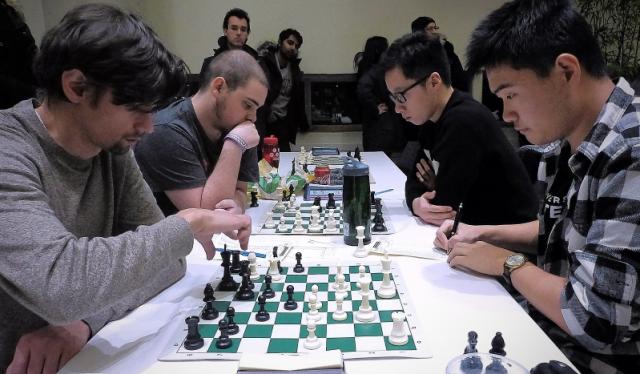
..
[Event "CUCC"]
[Site "UofO"]
[Date "2018.01.14"]
[Round "5"]
[White "Dukic, Zach"]
[Black "Qin, Joey"]
[Result "0-1"]
[ECO "B99"]
[WhiteElo "2222"]
[BlackElo "2502"]
[Annotator "John Upper"]
[PlyCount "62"]
[EventDate "2018.01.??"]
[EventType "team-swiss"]
[EventRounds "5"]

1. e4 c5 2. Nf3 d6 3. d4 cxd4 4. Nxd4 Nf6 5. Nc3 a6 6. Bg5 e6 7.
f4 Be7 8. Qf3 Qc7 9. O-O-O Nbd7 10. f5 $5 {The sixth most popular move in
this position -- WAY behind 10.g4 -- but recommended as a good alternative to
10.g4 in Negi's very well-received "GM Repertoire 1.e4 vs The Sicilian" vol.1,
(Quality Chess, 2015).} Ne5 (10... h6 {hoping to transpose into 8...h6 lines,
but here White has} 11. fxe6 $1 {with initiative - see Negi.}) (10... e5 11.
Nde2 b5 12. Bxf6 $1 Nxf6 13. Nd5 Nxd5 14. exd5 {Here is what Negi says: "A
very interesting strategic situation. The computer assesses it as comfortable
for Black, with an evaluation veering towards the dreaded "=/+", but that is
incomprehensible to me. Black's king lacks a safe haven, and he has virtually
no counterplay on the queenside; or at least it will be extremely slow to
materialize. If he ever opts for kingside castling, as the computer so
cheerfully does in many lines, White will just plonk his bishop on e4 to
secure the d5- and c2-pawns, then put his knight on h5 before starting a
terrifying kingside pawn assault. Even in the centre, the black king cannot
feel too comfortable, since White can either advance on the kingside in the
same way, or perhaps even play Kb1 followed by opening the c-file."...
followed by nearly a page of variations and explanations. This is the sort of
analysis which has made Negi's book so popular: a strong GM takes issue with a
computer eval and explains clearly why he trusts his judgment.}) 11. Qh3 Nfg4
12. Bxe7 Qxe7 13. Qg3 O-O 14. Qf4 ({Negi continues:} 14. Be2 Nf6 15. Qf4 $1 {
protecting e4 and preparing g4-g5.} b5 16. a3 $146 {"Holding up the queenside
play, and forcing Black to come up with a good counter to the g4-g5 plan." -
Negi.}) 14... Nf6 {Voluntarily retreating the Ng4 means White doesn't have to
spend a tempo on Bf1-e2.} (14... b5 $5) 15. Rg1 $1 b5 16. g4 b4 17. Nce2
$1 (17. Na4 $2 Qc7 $1 (17... Bd7 $2 18. Nb6 Rab8 19. Nxd7 Nfxd7 20. g5 {
and f5-f6 lands first.}) 18. g5 d5 $1 {the threat to win the Q with ...Nd3+
gives Black time to save the Nf6 with ...Nxe4.} 19. Kb1 {Only move.} Nxe4 20. Nf3 (20. f6
Bd7 $15) 20... Bd7 $1 {the tempo on the Na5, as well as play against c2 gives
Black enough time to save the pinned Ne5.}) 17... Bb7 18. Ng3 Rfc8 19. g5
Ne8 $2 (19... Nfd7 20. Kb1 Kh8 21. Bh3 Nc5 {defending e6 shows one advantage
of keeping the N more centralized.}) 20. Bh3 $5 {Keeps the advantage, but not
the best. Both h4 and Kb1 are better.} (20. Kb1 Nc4 {threatening ...e5} 21. Qf2
(21. f6 Qc7) 21... Kh8 (21... e5 22. f6 $18) 22. Bxc4 Rxc4 23. fxe6 fxe6 24.
Rd3 $1 $18 {and tripling on the f-file.}) 20... Nc7 $6 (20... exf5 $5 {removes
the pressure on e6, but concedes d5 and leaves the Bh3 hitting c8, the base of
Black's counterplay.} 21. Ngxf5 (21. exf5 f6 $1) 21... Qc7 22. Ne3 (22. Rdf1 $4
Nd3+ $19) 22... Ng6 23. Qf3 {keeps the e-pawn} (23. Qg3 $5 Rd8 24. Rgf1 Bxe4
25. Rxf7 $3 $18) 23... Ne5 24. Qg2 $16 {Black has the e5 square for a N, but
White has two good squares for both his Ns, and the Bh3 will make c-file
play expensive or time-consuming for Black.}) 21. Nh5 (21. f6 $1 $18 Ng6 22.
Qe3 gxf6 23. gxf6 Qxf6 $2 {helps White, and allows some pretty finishes; for
instance:} 24. Nh5 $1 Qe5 25. Rg5 Nd5 26. Qd2 Qxe4 27. Rxd5 $1 Qh4 28. Qh6 $18)
21... Qf8 $2 (21... Nb5 $1 {and White's best is a standard combo, with a
very-hard-to-see finish:} 22. Nf6+ $1 (22. fxe6 $6 Nxd4 23. exf7+ Kh8 24. Rxd4
(24. Bxc8 $4 Ne2+ $19) 24... Rf8 $14) 22... Kh8 23. Qh4 h6 {Only move.} (23... gxf6 24.
gxf6 Qf8 25. Rg7 $18) 24. gxh6 gxf6 {and it looks like Black is safe,
but now} 25. h7 $3 {and there's no good defence to Rg8+, which opens both the
h- and g-files for White's majors.}) 22. Qh4 $1 Kh8 {Critical
Position White has a colossal attack, but has to find the right move, and
clichees are not sufficient to find it.   If you do the analysis you'll know
which cliche applies: a) invite everyone to the party (with Rdf1); b) strike
while the iron is hot (with f6); c) make him an offer he can't refuse (with g6
or Nf6).} 23. Rdf1 $4 {This looks like it builds the pressure past bearable
levels, and soon any move will win, but it actually gives away all of White's
attack.} (23. Nxg7 $4 {is an offer Black is happy to accept,} Qxg7 $17 {
and now what...?}) (23. f6 $2 g6 $1 {and White's attack stalls until he can
open the h-file.}) ({Instead, White has two thematic and brutal ways to win:
g6 and Nf6:} 23. g6 $1 fxg6 24. fxg6 h6 25. Rdf1 Qg8 26. Rf7 Nxf7 27. gxf7 Qxf7
28. Nxg7 $18 {material will be nominally equal, but White is attacking with
all his pieces while Black's RRBN are cowering in the queenside corner.}) (23.
Nf6 $1 gxf6 24. gxf6 {Threatening Rg7.} Ne8 (24... Ng6 25. Rxg6 $1 fxg6 26.
fxg6 $18) 25. fxe6 {threatening e7, trapping the Q.} fxe6 26. Nxe6 (26. Rdf1 $1
{wins.}) 26... Qxf6 27. Ng5 {White can keep brining pieces into the attack
with Rdf1 and Bf5.}) 23... Nb5 {Only move.} 24. Ne2 Rc4 $1 25. Rf4 $2 (25. g6 {Only move.}
Bxe4 (25... Rxe4 $2 26. Nef4 fxg6 27. Rxg6 $3 Nxg6 (27... hxg6 $2 28. Nf6#) 28.
Nxg6+ hxg6 29. Nf4+ {Only move.} Kg8 30. fxg6 $18) 26. Nhg3 (26. Nf6 Rxc2+ 27. Kd1 h6 28.
Nxe4 Rxb2 $13) 26... fxg6 27. fxg6 Bxg6 28. Rxf8+ Rxf8 29. Qe7 {the only safe
square!} Re8 $1 (29... Rxc2+ $2 30. Kd1 Rfc8 31. Rf1 $18) 30. Rf1 $1 (30. Qb7
Rxc2+ $19) 30... Rcc8 $1 $13 {materially, Black has only Rpp for the Q, but
the attack on the Q and on c2 leaves White no good way to keep the material.} (
30... h6 $4 31. Rf8+ Rxf8 32. Qxf8+ Kh7 33. Bxe6 $18)) 25... Nd3+ (25... Rac8
$1 26. Kb1 Rxe4 $3 27. Rxe4 $2 Nf3 $19 {destroys White's center while the Ne5
wins the exchange on g1 instead.}) 26. Kb1 Nxf4 27. Nexf4 (27. Nhxf4 {
Looks crushing, since it threatens 28.g6 h6 29.f6!, which would be crushing.
But Black has the absurd-looking...} g6 $3 {(Not only stopping White from
playing to g6, but...)} 28. fxg6 (28. Ng3 Qg7 29. fxg6 (29. f6 Qg8 {White's
attack is finished and Black can go back to attacking c2 and e4.}) 29... fxg6
30. Bxe6 Rxc2 31. Kxc2 Nd4+ 32. Kb1 Nf3 {forking the Q and R.}) 28... Qg7 $19 {
bringing the Q to the long diagonal defends h7 and attacks b2.} 29. gxf7 (29.
Qxh7+ Qxh7 30. gxh7 Bxe4 {Black is up an exchange with the attack.}) 29... Bxe4
{and Black's counterattack wins!} 30. Rc1 (30. Nd3 $2 Bxd3 {with discovery on
Qh4.}) 30... Na3+ $1 31. bxa3 bxa3 {and White gets mated.}) 27... Bxe4 28. Nf6
gxf6 29. gxf6 Bxc2+ 30. Ka1 {Threatening Rg7+-.} Be4 {Exposing the attack
on c1 keeps White's R busy guarding the back rank.} (30... Bxf5 {is fine too:}
31. Bxf5 exf5 32. Qg5 (32. Rg7 $2 Rc1#) (32. Ng6+ fxg6 33. Qxc4 Qxf6 $19 {
is hopeless.}) 32... Rac8 33. Nh5 Rg4 $1 $19) 31. Nh5 Qh6 $1 {Hitting c1 and
pinning the N and keeping an eye on g7. White has no useful moves.} 0-1