

Endgame Analysis
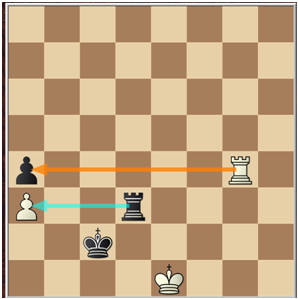
B. Corarreti - M. Kleinman
Hi, I realize I haven't posted an article in awhile, and this past reading week, after I had time to look over some of my recent games (from the past summer), I found some ideas that I felt would be useful to the readers, and I wanted to share them with you. As with my most recent articles, I wanted to show some endgame ideas. This was my last game at the Washington International played against a master last summer. I've outlined a similar position in my last article, where the white king needs to be cut off on the f-file in order for black to win.

That being said, there are still some practical tricks. 59...Kb3 60.Ke2 Rh3 61.Rg8 Kxa3 62.Ra8

This progression has been natural. I have captured the pawn, while white has situated his rook nicely behind my pawn, and is bringing his king in. Again, suppose the black king is on a1, pawn on a2, and White's rook is on b8, the position is dead drawn. Knowing this position, I had to avoid it. 62...Rh4 63.Kd2 Kb3 64.Kc1?? And this innocent looking move is all I need. White had a very simple draw, with 64. Rb8+. Now, try and find the win for Black! [64.Rb8+ Rb4 65.Rxb4+ Kxb4 66.Kc2=]

Black to play and win!
(Solution is below)
64...Rh1+ 65.Kd2 a3! 66.Rb8+ Kc4 67.Rc8+. [The main point is that: 67.Ra8 a2 68.Rxa2 Rh2+ –+]

Black to play and win
67...Kd4! Black need's to be very careful not to spoil this game. A lack of precision would allow White to draw. [67...Kd5? 68.Rc1 Rxc1 69.Kxc1=] 68.Rd8+ [The point is that now, I do not have to recapture the rook. 68.Rc1 Rh2+ 69.Kd1 Kd3–+] 68...Ke5 69.Re8+ Kd6 70.Rd8+ Ke7 71.Ra8 a2. And Black wins. If White recaptures the pawn, the standard rook skewer (72. Rxa2, 72... Rh2+) applies. This example shows how some knowledge of positions to avoid sometimes leads to underserved chances in completely equal positions. Hopefully you enjoyed it!